
Start with structured content instead of scattered copy.
Starter templates pair modern frameworks with Contentrain content models, generated clients, and repeatable workflows.
Astro
astro-blog
Blog and editorial
A publication starter for authorship, categories, SEO metadata, generated content queries, and review-ready Markdown entries.
- Markdown collections
- Author and category models
- Static SEO pages
Astro
astro-landing
Landing page
A campaign site structure with governed hero copy, feature blocks, FAQ content, CTA fields, and sitemap-friendly page data.
- Landing page sections
- FAQ and CTA fields
- Build-time content
Next.js
next-commerce
Commerce storytelling
A commerce content starter for product story pages, buying guides, merchandising copy, and localized campaign surfaces.
- Product story models
- Buying guide content
- Localized campaigns
Next.js
next-multi-surface-saas
Marketing, app, and docs
A SaaS starter that shares one content contract across website pages, in-app copy, help content, and agent-safe updates.
- Shared content contract
- Marketing and app copy
- Docs-ready structure
Next.js
next-saas-dashboard
Dashboard UI copy
A dashboard starter for empty states, settings labels, plan messaging, table copy, and reviewable operational UI text.
- UI string models
- Plan and settings copy
- Role-aware review path
Next.js
next-white-label-portal
White-label portal
A portal starter for reusable tenant copy, branded content overrides, approval branches, and delivery through Studio when teams scale.
- Tenant-ready content
- Brand override fields
- Studio upgrade path
Nuxt
nuxt-admin-console
Operations console
A Nuxt admin starter for content-driven navigation, workspace labels, audit copy, forms, and internal review workflows.
- Nuxt query usage
- Admin navigation content
- Audit-friendly UI copy
Nuxt
nuxt-saas
SaaS marketing
A Nuxt marketing starter for pricing, comparison pages, solution pages, SEO metadata, and generated content access.
- Pricing page content
- Comparison page model
- Nuxt server rendering
SvelteKit
sveltekit-editorial
Publication
A SvelteKit editorial starter for issue planning, author workflows, Markdown content, and branch-based review.
- Editorial collections
- Author workflow fields
- Review branch model
VitePress
vitepress-docs
Documentation
A docs starter for versioned guides, API reference content, navigation groups, and AI-readable documentation surfaces.
- Docs navigation content
- Guide and reference models
- AI-readable page structure
Starter model
Templates start with content models, not placeholder pages
A useful starter should include the content contract from the first commit: models, sample content, generated client access, SEO fields, and review-ready structure. That prevents copy from scattering across components.
- Models for common product surfaces
- Seed content that validates
- Generated SDK access wired into the framework
$ npx contentrain init --template nuxt-saas
✓ Cloned starter: nuxt-saas
✓ Models, content, and SDK ready
✓ Generated typed client
→ pnpm dev
Frameworks
Framework starters should match real delivery paths
Nuxt, Next, Astro, SvelteKit, VitePress, Expo, and Node projects all need different runtime patterns. Contentrain templates should show the correct query and generation approach for each framework rather than a generic CMS demo.
- Static site and server-rendered patterns
- Docs and editorial structures
- Mobile and backend consumption paths
Migration
Normalize makes legacy projects template-ready
For existing apps, the first template is often the current codebase after hardcoded strings are extracted. Normalize turns a messy project into a structure that can be reused for the next client or product.
- Scan existing UI text
- Extract approved content into models
- Patch source to consume generated content
$ contentrain scan ./src
Scanning source for hardcoded strings…
✓ Scanned 47 files
123 candidate strings found
marketing/hero 18
ui/navigation 24
ui/buttons 31
→ extracted to branch cr/normalize/marketing
✓ Ready for review in Git
Studio handoff
Studio templates make client handoff easier
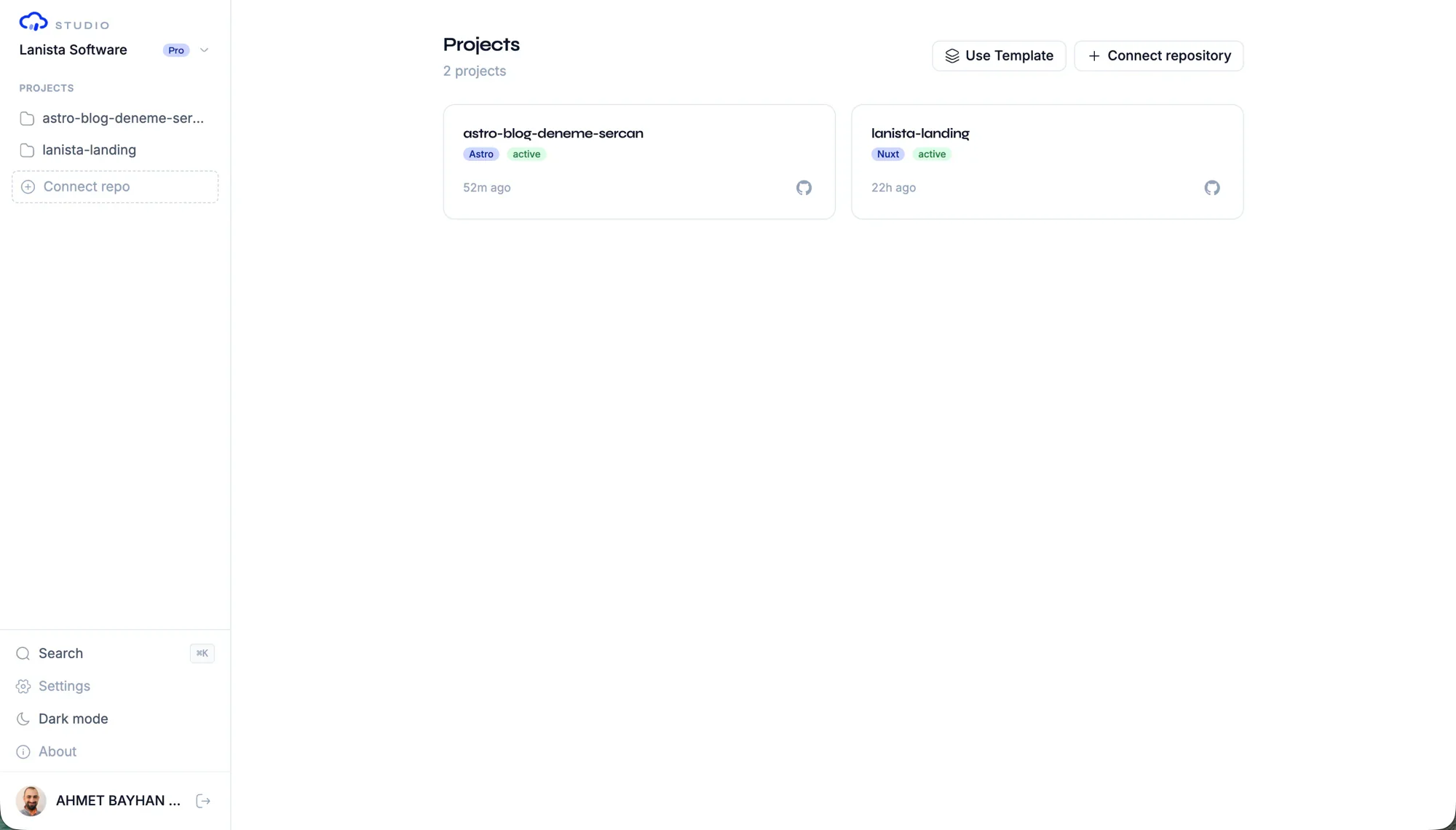
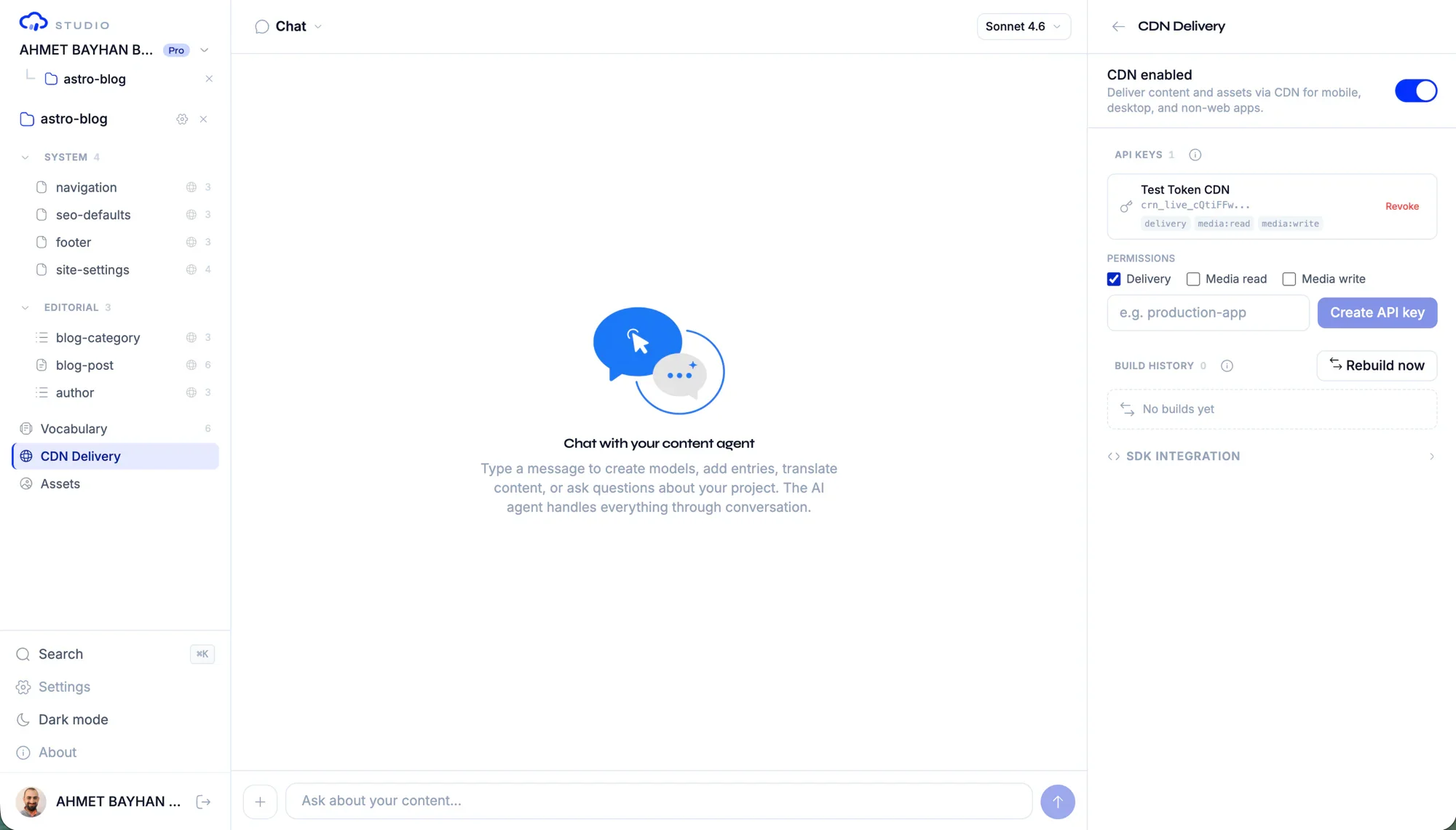
Studio includes template creation and GitHub installation surfaces. Agencies and platform teams can use starters to create repeatable workspaces, then invite non-developers into a governed editing experience.
- GitHub create-from-template route
- Starter kit dialog in Studio
- Workspace and project setup flow
Content teams
Studio chat and UI workflows over Git-backed content with review and roles.
Workflow
The best templates become productized workflows
A template should not stop at a pretty homepage. It should encode the repeatable content lifecycle: model, write, validate, review, deliver, translate, and evolve with agent assistance.
- Content quality and SEO fields included
- Branch review and validation expectations
- Upgrade path into Studio collaboration
$ contentrain diff
● Pending branches (3)
cr/content/marketing/hero +2 / -1
cr/content/blog/launch +5 / -0
cr/content/faq/pricing +1 / -0
✓ Approve in Git → merged to main
Common questions
Are templates only for new projects?
No. Existing projects can use Normalize first, then adopt the same model and SDK patterns that a starter would have provided from day one.
What should a Contentrain template include?
At minimum: models, seed content, SEO fields, generated client access, validation scripts, and clear paths for review and localization.
Why are templates important for the business model?
They convert open-source adoption into repeatable success. The more quickly teams get real content under governance, the more naturally Studio becomes valuable.
Next paths
Continue through the content system
Start local. Scale to Studio.
Build a governed content layer before content becomes product debt.
Start locally with the MIT packages. Add Studio when teams need review, roles, structured editing, managed delivery, or deployment control.