
One content contract for web, mobile and APIs
Deliver structured content to web, docs, mobile, and APIs from the same Git-backed system.

Contract
Standardize content as a platform contract
Platform teams need one content shape across product surfaces, not a CMS integration per app. Contentrain keeps models, content, validation, context, and generated access in a portable repository contract.
- Model definitions for shared schemas
- Plain JSON and Markdown content state
- Generated clients for runtime consumers
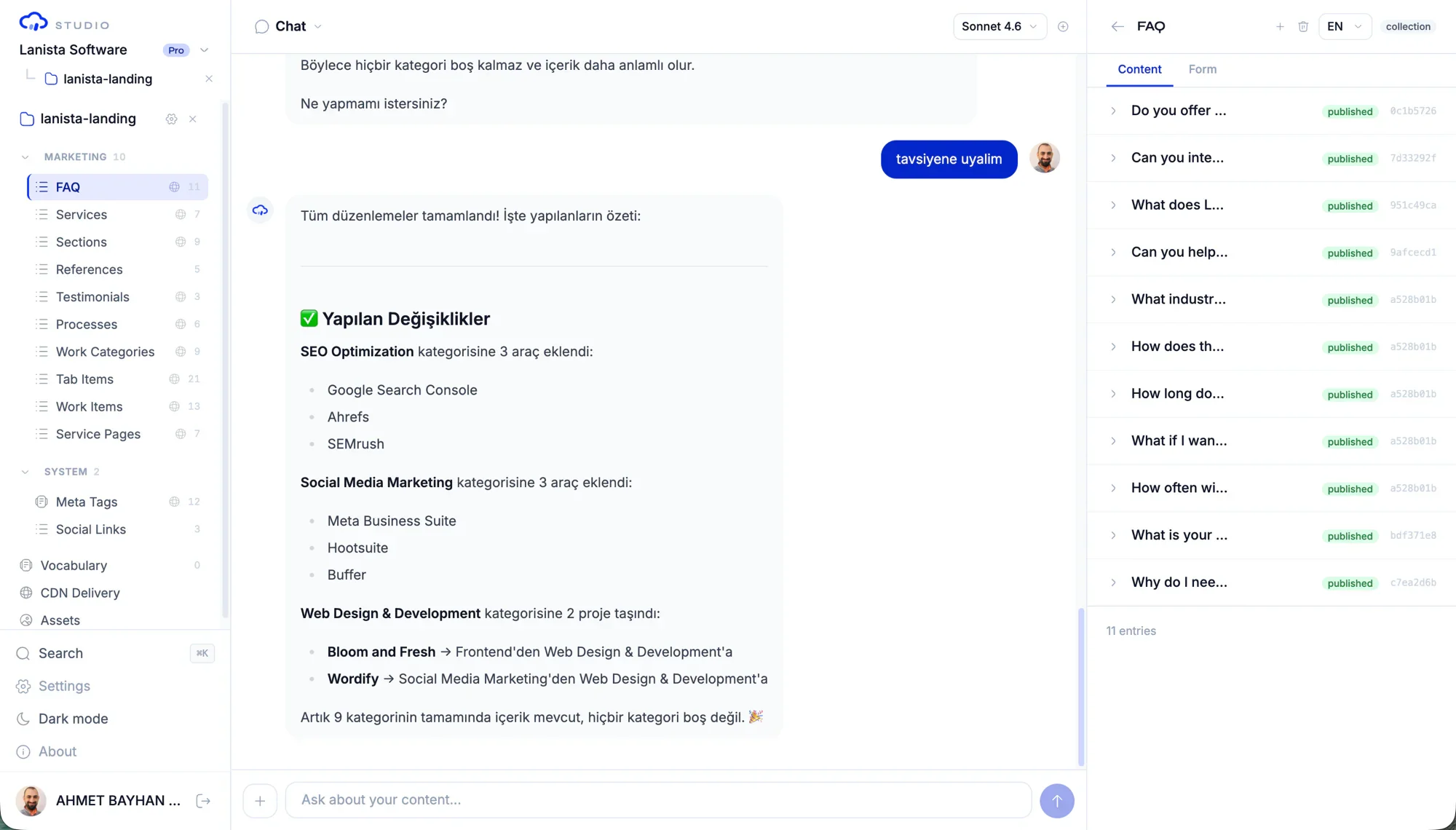
Multiplatform
Serve web, docs, mobile, and backend consumers
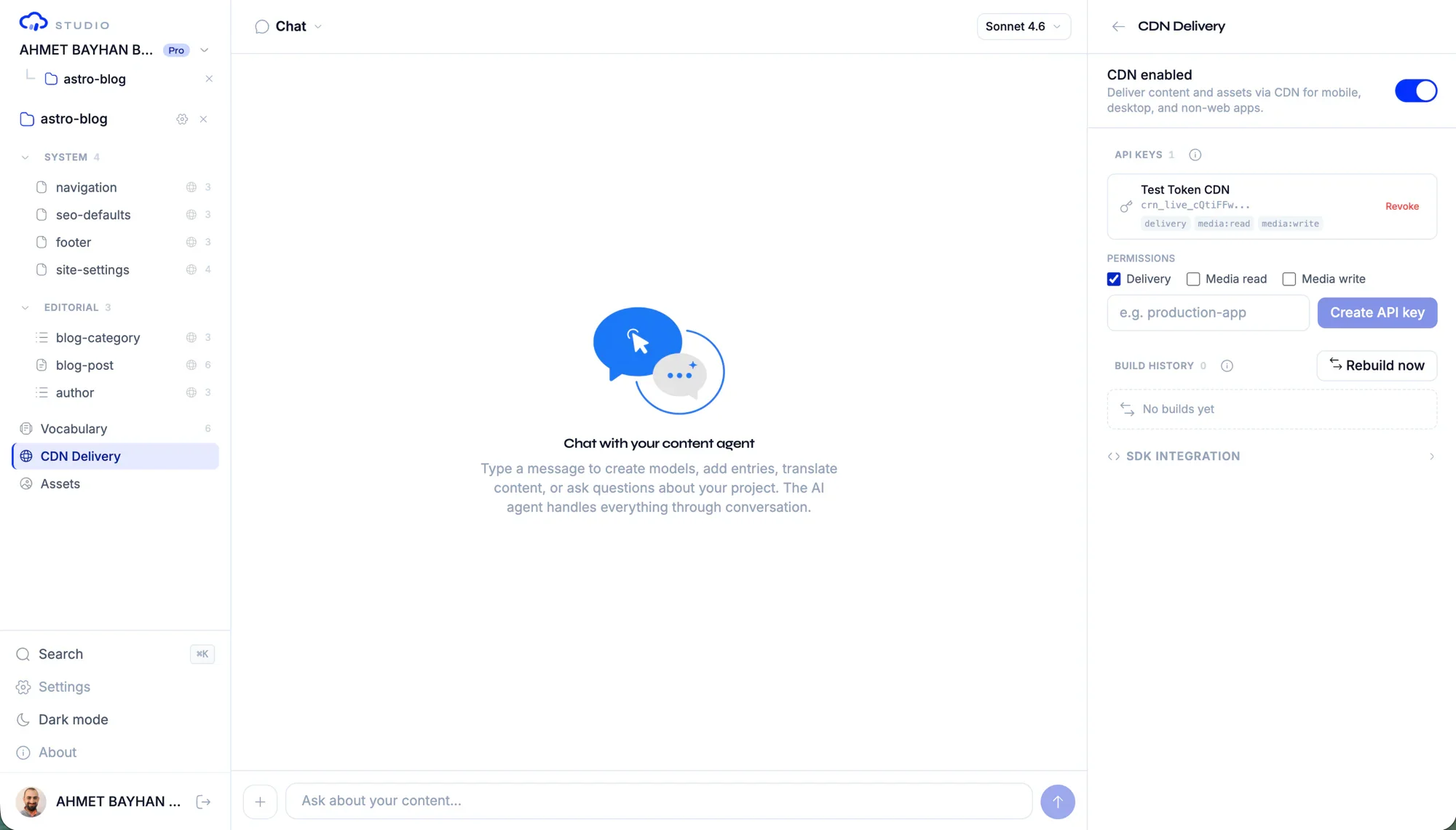
The query SDK and generated clients let frontend and backend systems consume the same content without each team inventing parsing logic. Eligible Studio plans and deployments add CDN and API delivery for runtimes that need it.
- Nuxt, Next, Astro, SvelteKit, Vite, Node, Expo, and React Native paths
- Static and server-rendered consumption
- Eligible CDN delivery for production runtime access
Agent platform
Give agents the same platform rules as developers
MCP tools, rules, skills, and context files make the content platform understandable to coding agents. That matters when agents are creating components, docs, localization files, and content migrations.
- Project context visible in the repo
- Rules for schema, SEO, i18n, workflow, and security
- Bounded content operations through MCP
# Agent operating rules
- Save content through MCP tools only
- Validate against the schema before submit
- Open a review branch per change
- Never edit generated files
# shared by every agent on the repo
Control plane
Centralize governance in Studio when teams scale
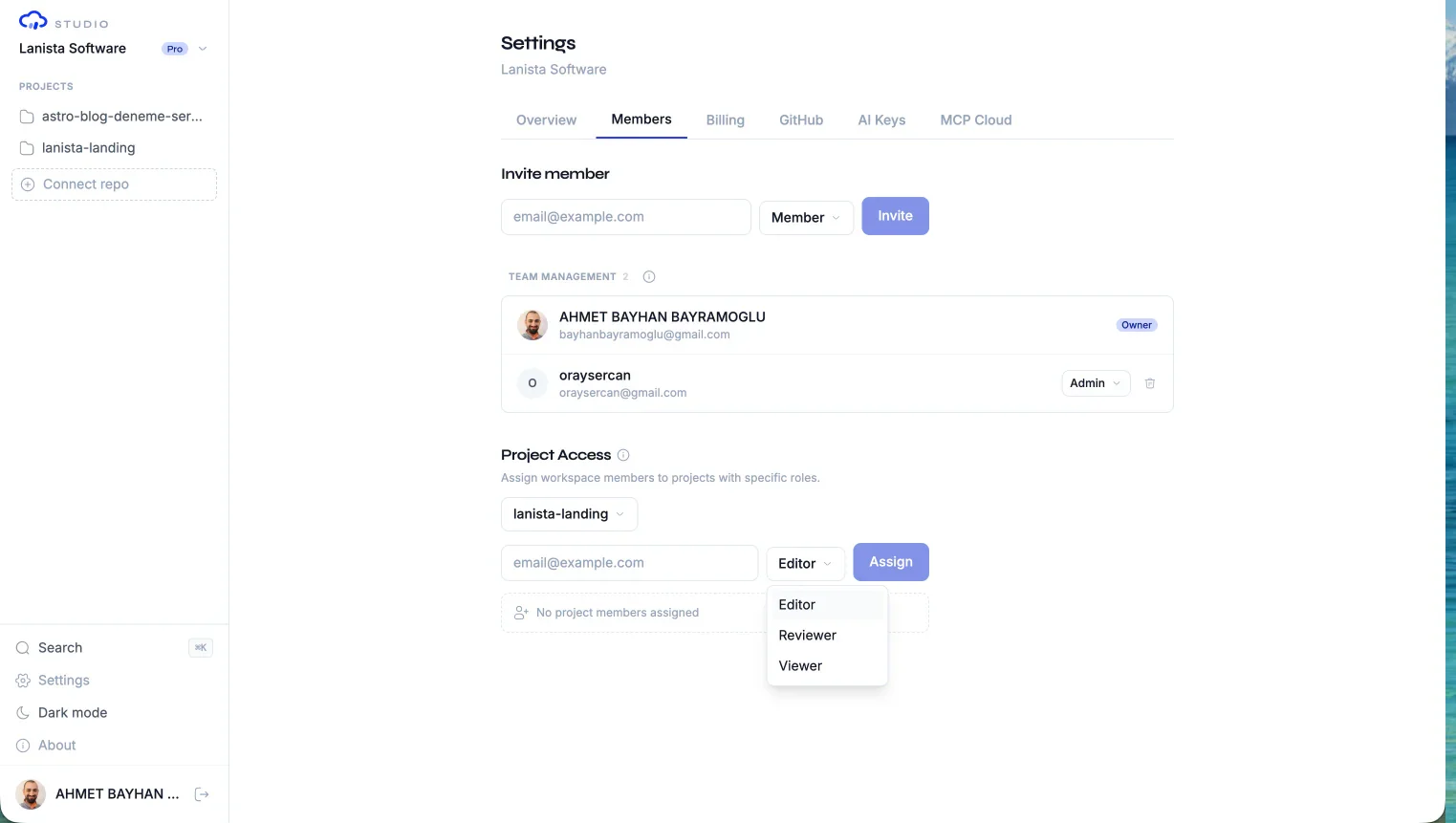
As more teams publish content, platform owners need roles, review, branch health, and usage visibility. Studio provides those controls, with model-scoped access, media, CDN, forms, and webhooks available according to plan and deployment.
- Workspace and project administration
- Role and model-level access
- Delivery and usage surfaces
Portability
Avoid locking the platform to one vendor runtime
Because content state stays in Git and access can be generated, the platform can evolve across frameworks and deployment targets. Studio adds services without making content invisible to the codebase.
- Portable content files
- Generated SDK access
- SaaS or self-managed Studio paths
Git is the source of truth
Content lives in your repo as plain JSON and Markdown — every change is a commit, branch, and reviewable diff.
Common questions
Why should platform teams care about Contentrain?
It creates a shared content contract that developers, agents, editors, and delivery systems can all use without hiding state inside a remote-only CMS.
Can one Contentrain project serve multiple apps?
Yes. The model and generated access patterns are designed for shared content across web, docs, mobile, backend, and delivery surfaces.
Where does Studio fit for platform teams?
Studio becomes the control plane for permissions, review, and team operations. Media, delivery, forms, webhooks, APIs, and usage controls appear when the plan and deployment enable them.
Next paths
Continue through the content system
Developer implementation playbook
Install, model, validate, generate, and ship runtime access.
Studio adoption playbook
Add Studio for team review and roles, with media, delivery, and enterprise options where enabled.
Integrations
See agent, framework, provider, and deployment paths.
AI agent governance playbook
Bound MCP tools, rules, review, and validation for coding agents.
Start local. Scale to Studio.
Build a governed content layer before content becomes product debt.
Start locally with the MIT packages. Add Studio when teams need review, roles, structured editing, managed delivery, or deployment control.