
Give AI agents bounded content operations
Agents can create, update, translate, search, and validate content through deterministic tools instead of editing source strings directly.
$ contentrain serve
◇ 19 bounded tools available
contentrain_scan contentrain_apply
contentrain_validate contentrain_submit
contentrain_content_save contentrain_merge
# the agent can only do what the tools allow
Governance
AI content needs an operating boundary
If agents can freely edit copy, schemas, translations, and docs, quality depends on prompts alone. Contentrain gives agents tools, rules, validation, and review paths that define acceptable operations.
- MCP tool boundaries
- Shared rules and skills
- Validation before delivery
▸ "Add a pricing FAQ entry"
→ contentrain_content_save
model: faq locale: en
→ contentrain_validate
✓ Saved to branch cr/content/faq
# agent proposes · you approve in Git
Context
Make project context visible to the agent
The .contentrain project files describe models, context, vocabulary, content, and metadata in the repo. Agents can inspect the content system before they generate or modify product copy.
- Project context file
- Vocabulary and model definitions
- Content files readable in Git
# Agent operating rules
- Save content through MCP tools only
- Validate against the schema before submit
- Open a review branch per change
- Never edit generated files
# shared by every agent on the repo
Quality
Use rules for quality, not taste
The rules package covers content quality, SEO, i18n, accessibility, media, schema, security, normalize, and workflow expectations. That turns subjective review into repeatable checks.
- SEO title and description guidance
- Locale and schema validation expectations
- Security and MCP usage rules
Approval
Require human review for production changes
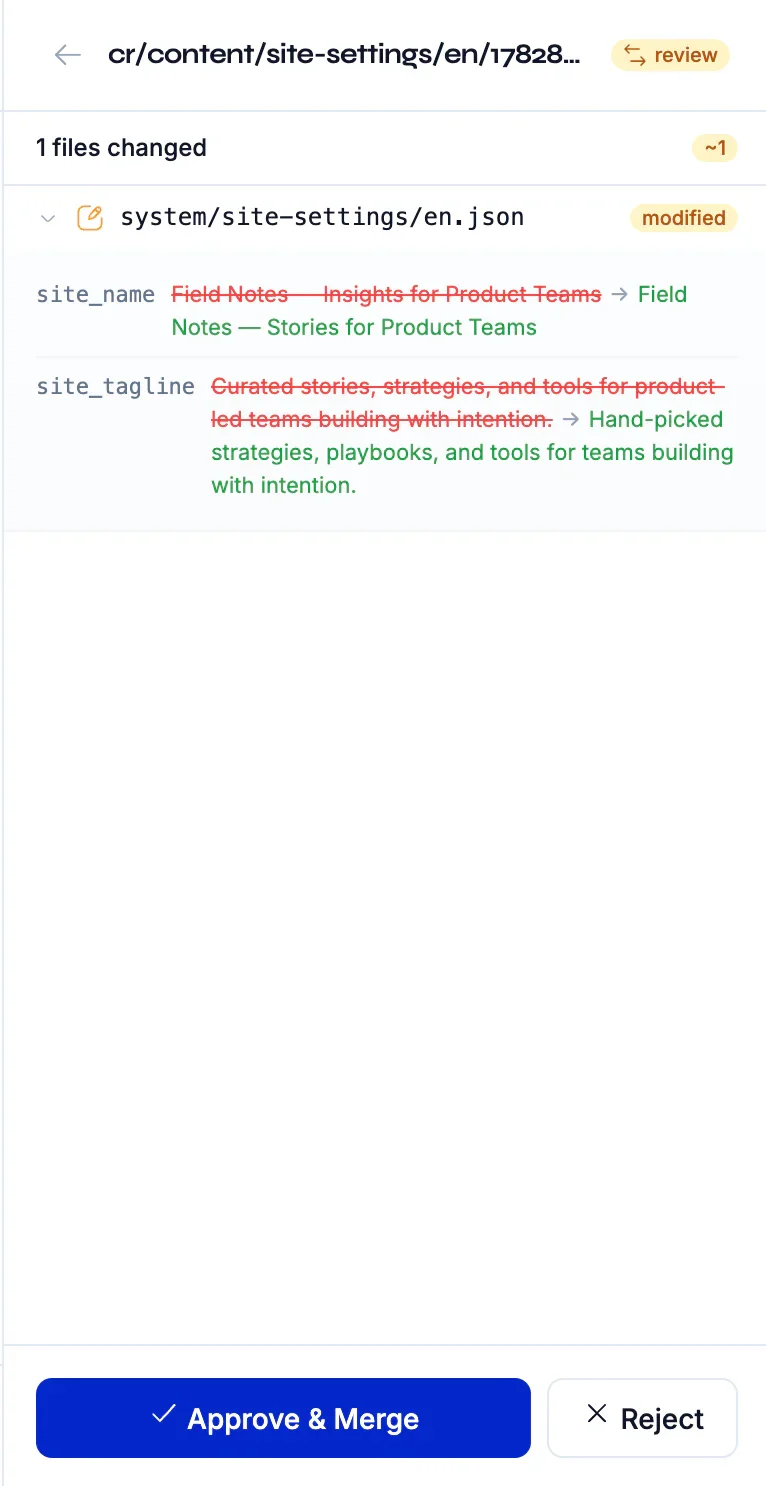
Content governance is not complete until humans can approve important changes. Studio branch review, diff views, roles, and branch health checks make that possible for AI-assisted content.
- Branch detail views
- Reviewer and editor paths
- Health checks before merge
$ contentrain diff
● Pending branches (3)
cr/content/marketing/hero +2 / -1
cr/content/blog/launch +5 / -0
cr/content/faq/pricing +1 / -0
✓ Approve in Git → merged to main
Lifecycle
Govern the whole content lifecycle
The same governed model covers extraction, writing, translation, and review. Studio can extend it to media, delivery, forms, webhooks, and external APIs when those capabilities are enabled.
- Normalize and translation workflows
- Eligible Studio media and delivery operations
- Conversation API on eligible editions and plans
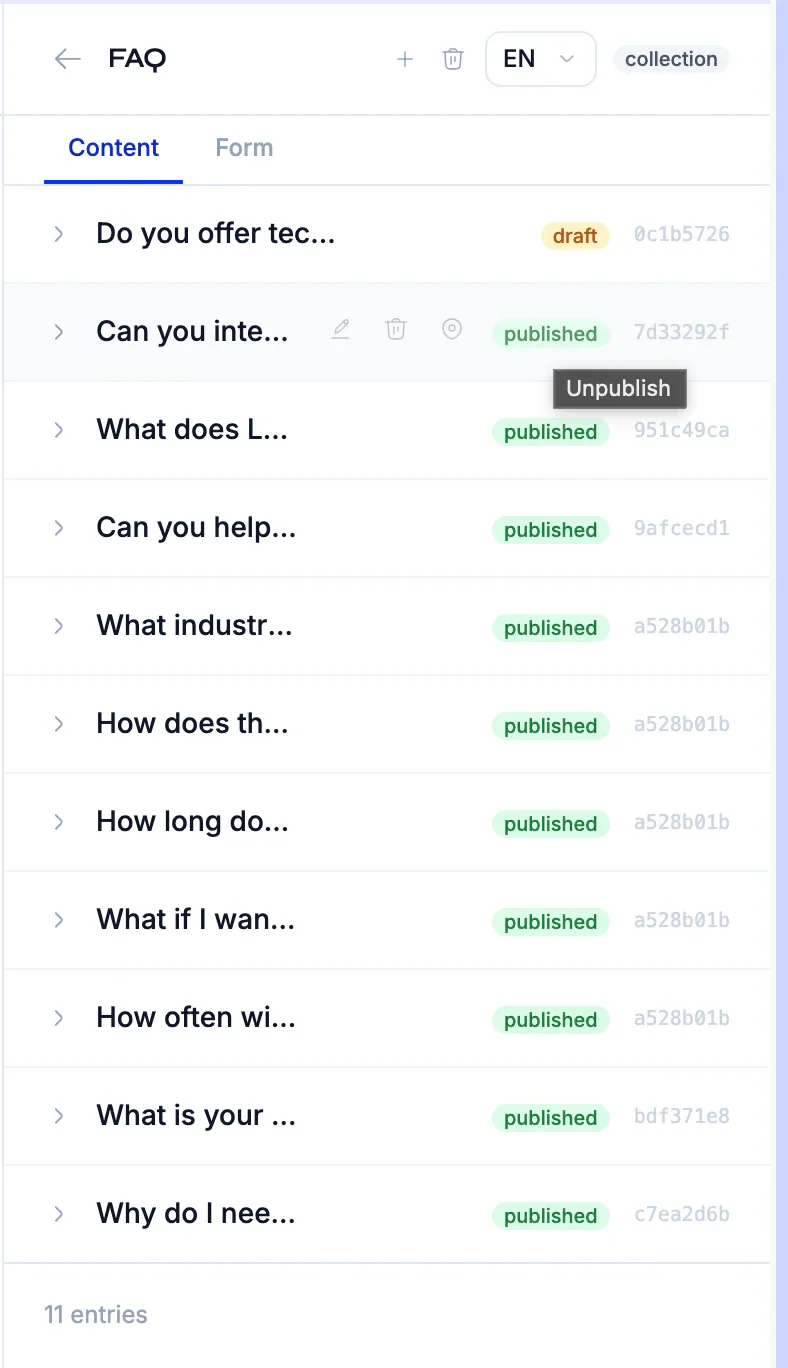
Common questions
What is AI content governance?
It is the system of tools, rules, validation, permissions, and review workflows that controls how AI creates or changes product content.
Why is Git important for governance?
Git gives content changes history, diffs, branches, and review habits that engineering teams already trust.
Can governance start locally?
Yes. The MIT packages let a developer start with local MCP, rules, validate, normalize, and generated access before Studio is needed.
Next paths
Continue through the content system
AI agent governance playbook
Bound MCP tools, rules, review, and validation for coding agents.
Developer implementation playbook
Install, model, validate, generate, and ship runtime access.
Studio adoption playbook
Add Studio for team review and roles, with media, delivery, and enterprise options where enabled.
Start local. Scale to Studio.
Build a governed content layer before content becomes product debt.
Start locally with the MIT packages. Add Studio when teams need review, roles, structured editing, managed delivery, or deployment control.