
AI Agents
MCP-compatible coding agents can read project context, operate content models, validate changes, and submit review branches without owning the whole repository.
Claude Code
Cursor
Windsurf
GitHub Copilot
Cline
Continue
Aider
Any MCP client
Contentrain stores content as plain JSON and Markdown in Git, exposes MCP tools to agents, and provides generated query access plus eligible CDN and API delivery paths.
MCP-compatible coding agents can read project context, operate content models, validate changes, and submit review branches without owning the whole repository.
Generated query clients keep content access close to the framework runtime, whether the page is static, server-rendered, mobile, or a backend service.
Git providers, deployment platforms, and self-hosted infrastructure stay interchangeable because the content contract remains file-based and reviewable.
Agents
Contentrain integrates with MCP-compatible agents through local stdio and HTTP transports. The agent gets structured tools for status, content, models, validation, scanning, normalize, branch submission, and bulk operations.
$ contentrain serve --mcpHttp
◇ MCP server ready on :4000/mcp
19 deterministic tools registered
contentrain_content_save
contentrain_validate
contentrain_scan
contentrain_merge
# agent proposes · tools enforce · git reviews
Frameworks
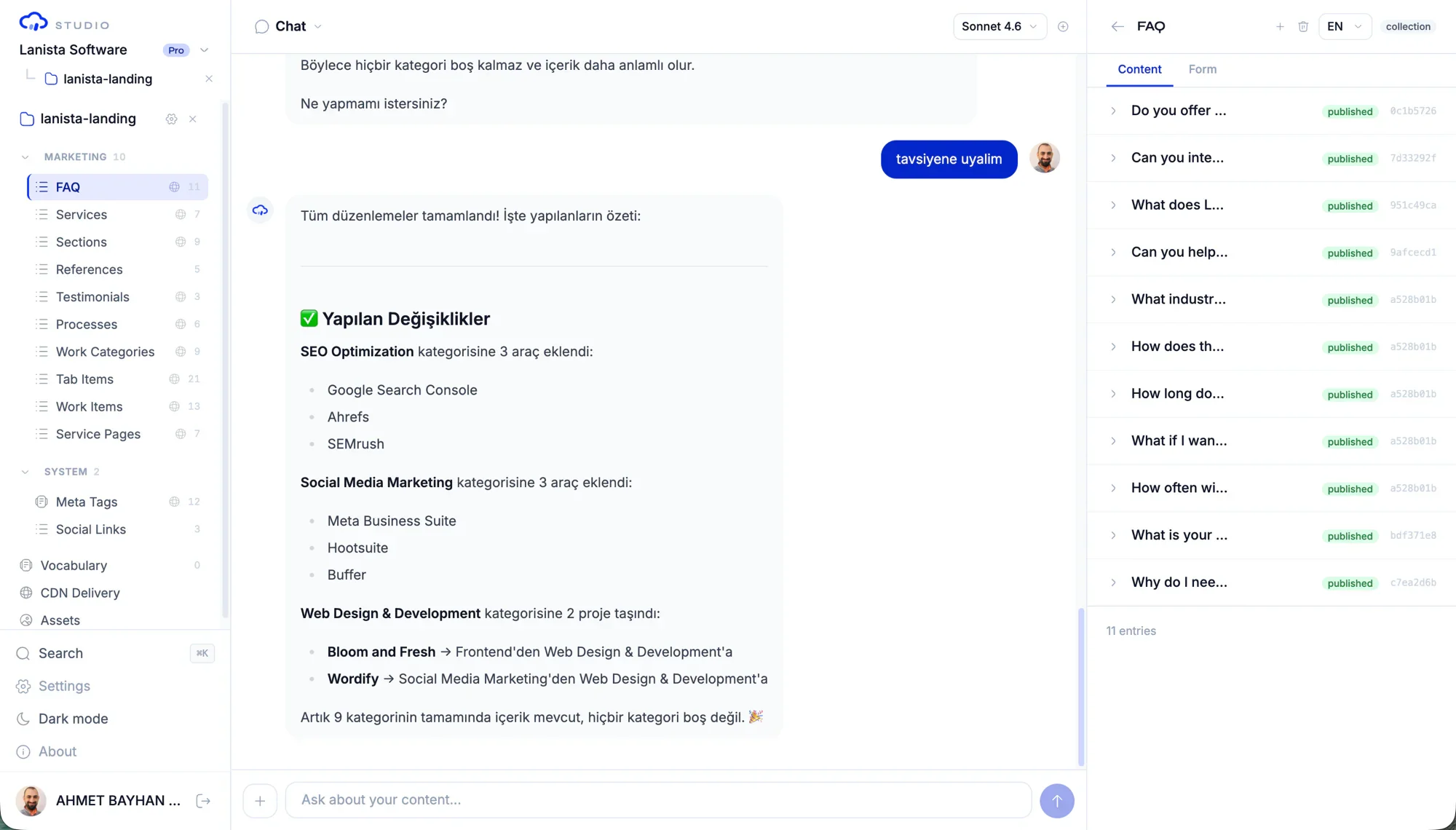
The SDK supports modern JavaScript application workflows by generating a content query client. Nuxt, Next, Astro, SvelteKit, Vite, Node, Expo, and React Native projects can consume content without coupling to a database CMS.
Git providers
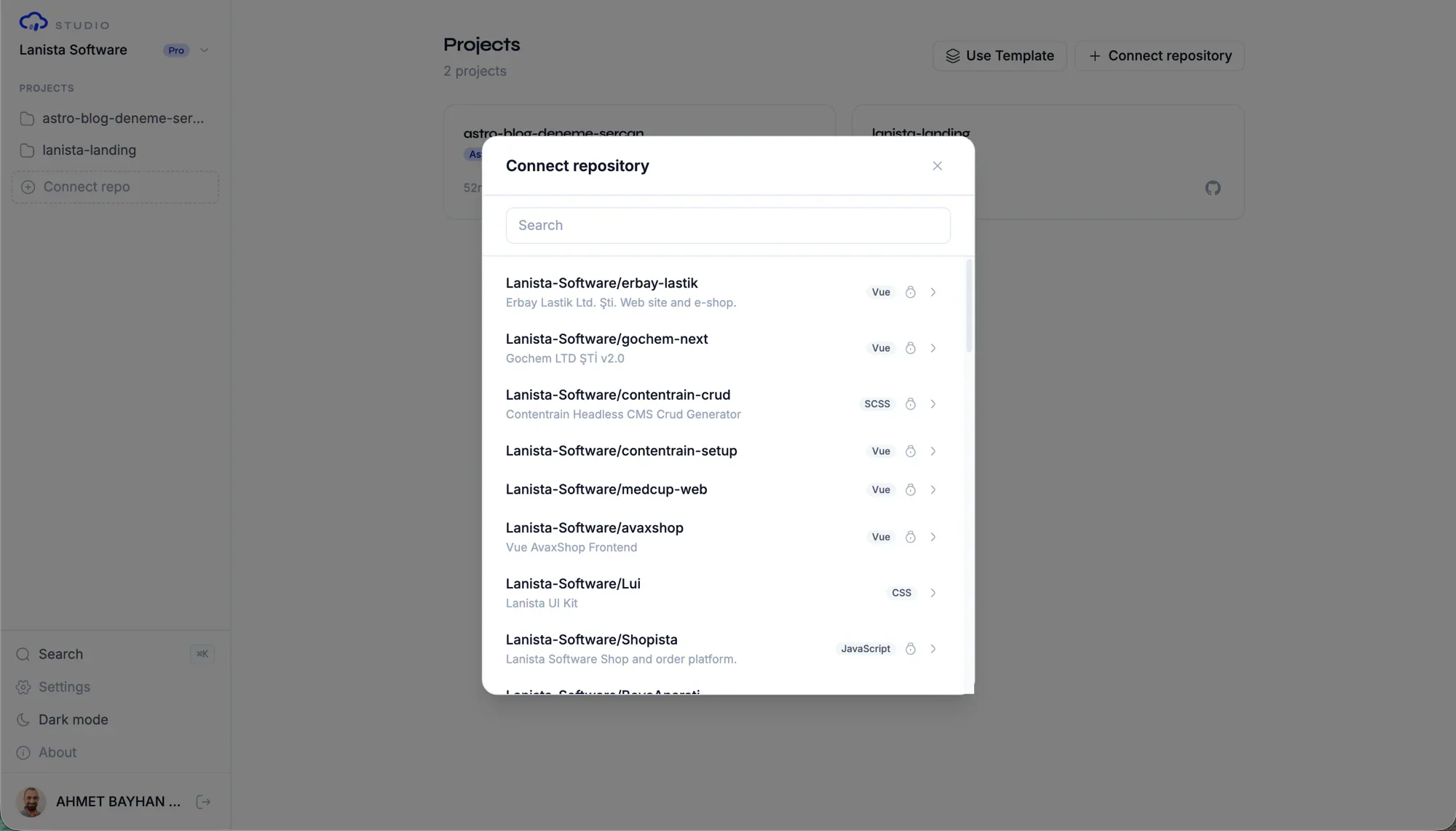
The provider architecture separates content operations from the place where the repository lives. Local provider access is strongest for normalize; GitHub and GitLab paths support hosted repository workflows.
$ npx contentrain init
✓ Detected stack: nuxt
✓ Created .contentrain/
✓ MCP server configured for your IDE
→ Git is now your content source of truth
# next: contentrain scan ./src
Studio APIs
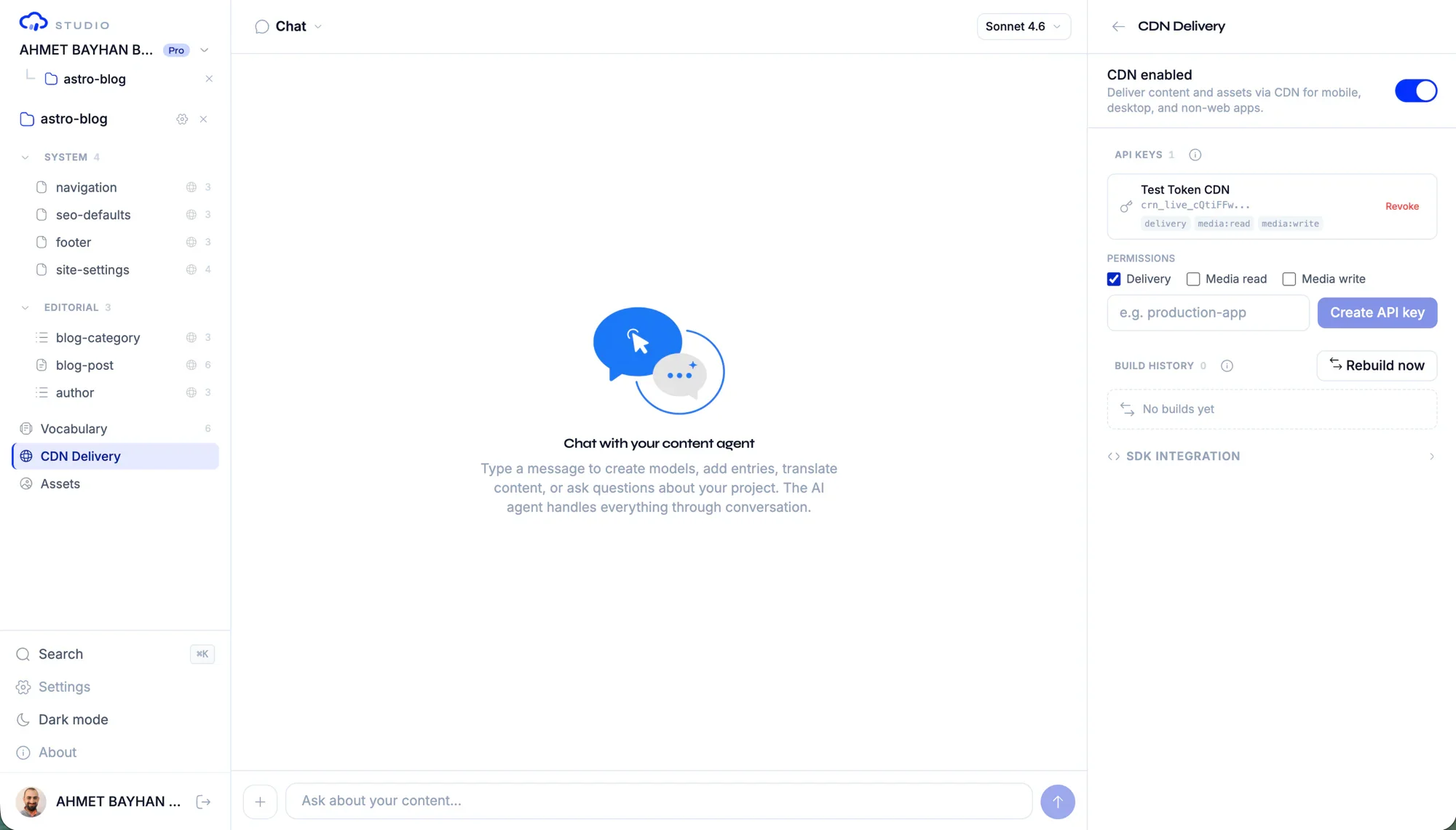
Studio can add CDN routes, Conversation API, form submissions, webhooks, billing, usage, and workspace APIs. Each operational integration remains conditional on edition, plan, provider, and deployment capabilities.
$ contentrain cdn build
✓ Built 32 content routes
✓ Pushed to CDN edge
→ delivered as JSON over a global CDN
Deployment
Contentrain can stay local for a developer, run as a Nuxt Studio app, or be deployed in self-managed infrastructure. The content contract stays file-based while delivery and team workflows can move closer to production needs.
Any environment that can use the Contentrain MCP server can operate the content system through bounded tools. The integration point is MCP, not a single proprietary agent.
Not always. Many apps can use generated content access at build or server time. Studio CDN and APIs are available only when the plan and deployment enable them.
Normalize and source patching need real source access. Remote providers are better for repository workflows where content changes are reviewed through hosted Git operations.
Next paths
Install, model, validate, generate, and ship runtime access.
Bound MCP tools, rules, review, and validation for coding agents.
Add Studio for team review and roles, with media, delivery, and enterprise options where enabled.
Move hardcoded UI copy into structured content safely.
Start local. Scale to Studio.
Start locally with the MIT packages. Add Studio when teams need review, roles, structured editing, managed delivery, or deployment control.